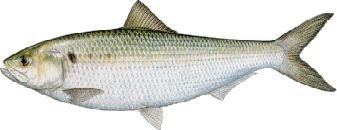
The American shad or white shad, has a metallic blue-green back that lightens to silver along its sides and a black spot at the shoulder, with several smaller spots trailing behind. While in fresh water, their back will turn a more molted brown color. Shad have large scales that provide an armor like protection from predators. Although most shad aren't in general a large species of fish, anglers pursue them for their hard fighting instincts.
Shad only enter freshwater sections of rivers from where they were born to spawn (spring to early summer). As the shad migrates from salt water to fresh, its cloak of large, easily-shed scales dulls from blue-green to brown. Shad usually migrate swiftly, moving far enough upstream for the eggs to drift downstream and hatch before reaching saltwater. After spawning, adults either die or return to the sea. A female lays up to 600,000 eggs, while several surrounding males fertilize them.
At sea, young shad join other young shad schools and begin a three to five year coastal migration. These youngsters will feed on plankton, small crustaceans and other small fishes. After four to six years they reach sexual maturity and begin returning to their places of birth to spawn. Some shad can live up to 10 years.
