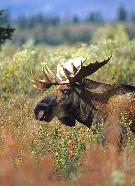
A moose is the size of a horse and is the largest member of the deer family with long, dark brown hair, high, humped shoulders and long legs. A section of hair-covered skin, called a bell or dewlap, sometimes reaches two feet, hanging under the throat. Males begin growing antlers each April, sometimes reaching 4 to 5 feet tall and 70 inches across. After rutting season, bulls will lose their antlers.
A bull moose can reach up wards of 1,400 pounds and the subspecies Tundra Moose Alces alces gigas, found in Alaska, can reach 1,800 pounds and 8.5 feet long. Their long legs and size doesn't slow them down, reaching speeds up to 35 miles per hour.
They range throughout lightly forested regions of North America in spruce forests, swamps, aspen and willow thickets. This creature is built to live in tough country and is well adapted to a cold climate.
Moose are herbivores, with winter diets consisting of branches and other dry woody materials, the scat is in pellet form. Summer diets are favorably water vegitation, found in swamps, lakes, rivers and streams.
Rutting season lasts from early September to late October. Gestation for the female lasts approximately 230 days, where usually 1 to 2 calves are born. Cow moose are very protective of their calves. They have been known to charge and mame people, horses and automobiles. In some cases of moose upredictibility, deaths have occurred.
