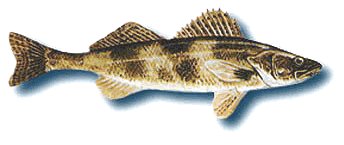
Sauger look almost identical to walleye and saugeye. In fact, this species occasionally hybridizes with walleye in nature. Its body is torpedo-like with dark blotches along the sides. A sauger has sharp canine teeth and large cloudy eyes, where it can be distinguished from walleye by the large dark spots on its spiny dorsal fin. Most sauger range from 9 to 15 inches in length and are less than 1 pound.
This fish occurs in large, turbid slow moving rivers, and large, cool shallow lakes. Sauger are distributed in east and central North America, extending as far west as Alberta and Montana and east to the Appalachians. It extends down into Alabama and north almost to James Bay. It is found in all of the Great Lakes except Lakes Erie and Ontario.
Adult sauger primarily feed on fish and large invertebrates such as leeches and crayfish during periods of low light.
Springtime is when the sauger spawns. Females lay between 10,000 and 50,000 adhesive eggs, which stick to stones, vegetation and sticks until they hatch around ten days later. Sauger prefer to forage for aquatic insects, crayfish, and small fishes during periods of low light.
